Silicone baking mats offer a non-stick alternative constructed from high-quality, food-grade silicone. Their thickness of 0.75MM enhances heat retention and durability while promoting even cooking. These mats maximize airflow, preventing sogginess and ensuring crisp results. Although they have a higher initial cost than parchment paper, they are reusable and environmentally friendly. Care instructions are straightforward, helping maintain their integrity. Users may find both benefits and drawbacks, and further insights on performance comparisons are worth examining.
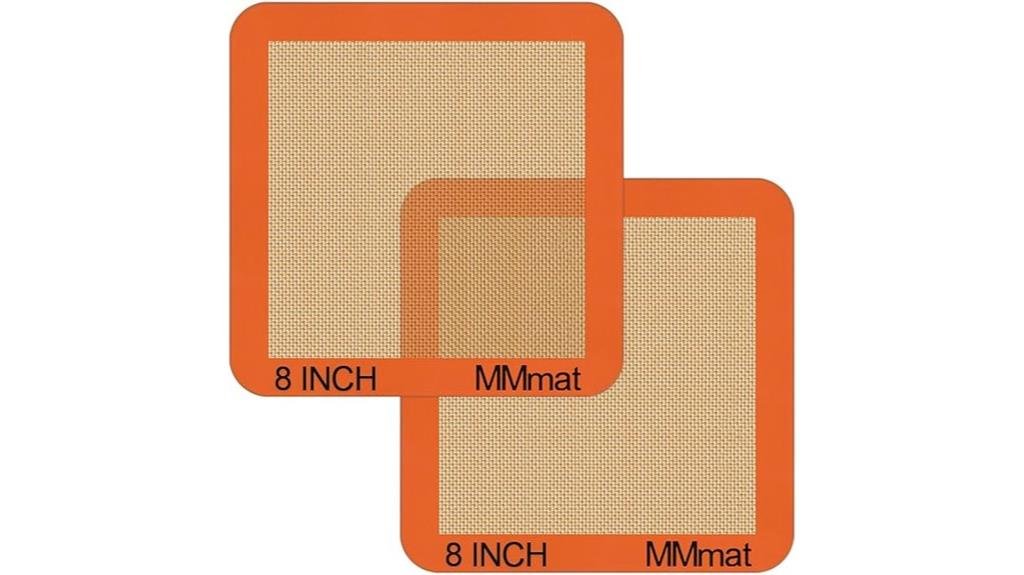
Non-Toxic, High-Quality Silicone
A significant advantage of the Silicone Baking Mats is their construction from high-quality, food-grade silicone, specifically sourced from German WACKER silicone. This premium material adheres to rigorous safety standards, ensuring that users can bake with confidence. The mats are BPA-free, PFOA-free, and non-toxic, aligning with consumer demands for healthier cooking alternatives. The careful silicone sourcing enhances durability while providing a non-stick surface that facilitates easy food release. As a result, these mats not only promote safety in food preparation but also contribute to a sustainable kitchen environment by reducing waste associated with disposable liners and oils.
Silicone Thickness Advantage
Thickness serves as a critical factor in the performance of silicone baking mats, and the 0.75MM thickness of these mats distinguishes them in the marketplace. A thickness comparison reveals that many standard mats fall below this measurement, potentially compromising baking efficiency. Thicker mats provide enhanced heat retention and distribution, leading to more consistent cooking results. They also exhibit greater durability, resisting wear and tear over time. This added resilience translates to a longer lifespan, offering users a sustainable alternative to disposable options. Overall, the thickness of these silicone mats considerably elevates their functionality and reliability in various culinary applications.
Maximizes Air Circulation Efficiency
While many baking surfaces can hinder air circulation, silicone baking mats are uniquely designed to maximize airflow during the cooking process. The mats feature a textured surface that promotes even heat distribution, enhancing air circulation around food items. This design element not only prevents sogginess but also contributes to cooking efficiency, allowing baked goods to achieve ideal crispness. By facilitating a balanced exchange of heat and air, silicone mats help to create uniform cooking conditions. The result is consistently well-cooked dishes, making these mats an invaluable tool for those who prioritize both quality and freedom in their culinary endeavors.
Benefits and Drawbacks
When evaluating silicone baking mats, it is essential to contemplate both their advantages and disadvantages. These mats offer notable benefits, enhancing user experience through their non-stick capabilities and ease of cleaning. However, a performance comparison with traditional baking methods reveals some drawbacks.
- Durability: Silicone mats can wear down over time, affecting longevity.
- Temperature Limits: Although heat resistant, exceeding recommended temperatures may cause degradation.
- Initial Cost: The upfront investment is higher compared to parchment paper, which may deter some users.
Ultimately, understanding these factors aids in making informed decisions regarding silicone baking mat usage.
Home Bakers and Chefs
Home bakers and chefs often seek tools that enhance their culinary experience, and silicone baking mats have emerged as a popular option in kitchens. These mats facilitate various baking techniques, allowing users to experiment with texture and presentation without the hassle of sticking. Their non-stick surface supports seamless food release, promoting creativity in flavor pairings by enabling intricate designs and uniform baking. Additionally, the mats’ versatility caters to a wide range of recipes, from cookies to pastries. As a result, home bakers and chefs can focus on their culinary artistry, confident that their tools will meet their demands for performance and reliability.
Affordable, Reusable Kitchen Essential
Silicone baking mats represent a practical and cost-effective solution for both novice and experienced cooks seeking to enhance their kitchen toolkit. These reusable essentials contribute greatly to kitchen organization, minimizing clutter from disposable parchment paper and greasy oils. With their non-stick surface, they guarantee effortless food removal, making clean-up straightforward and efficient. Their durability and heat resistance up to 500°F (260°C) further enhance their utility, allowing for various cooking methods, from baking to roasting. By investing in silicone baking mats, cooks not only save money over time but also embrace an eco-friendly alternative that prioritizes convenience and functionality in the kitchen.
Highly Rated for Durability
Many users have praised silicone baking mats for their exceptional durability, which sets them apart from traditional baking surfaces. In numerous durability tests, these mats have demonstrated resistance to wear, tear, and extreme temperatures, often outlasting competitors. User feedback consistently highlights their ability to maintain structural integrity even after extensive use, ensuring they remain a reliable choice for baking enthusiasts. The thick 0.75MM construction adds to their longevity, making them less susceptible to damage. This resilience not only enhances performance but also reinforces their value as a sustainable kitchen tool, appealing to those seeking quality and durability in their culinary endeavors.
Highly Durable and Reusable
Although durability is a significant factor in the overall performance of baking mats, their reusability further enhances their appeal to both casual cooks and seasoned bakers. Silicone baking mats, crafted from premium WACKER silicone, offer an eco-friendly option that reduces waste associated with disposable alternatives. Their robust design guarantees longevity, enabling repeated use without compromising performance. This durability translates into long-term savings, as users can forgo frequent replacements of parchment paper or oil sprays. By investing in these mats, bakers not only support sustainable practices but also enjoy efficient cooking experiences, making them a wise addition to any kitchen.
Care Instructions for Longevity
To maximize the lifespan and performance of silicone baking mats, careful attention to care instructions is necessary. Effective cleaning techniques include wiping with a damp cloth or placing them in the dishwasher for more thorough sanitation. Avoid using abrasive materials that could damage the surface. For best storage, keep the mats flat or rolled in a cool, dry place to prevent creasing. Additionally, refrain from exposing them to direct flames or sharp objects. Following these guidelines guarantees the mats maintain their non-stick properties and overall integrity, promoting long-term usability and enhancing the baking experience.
